

DTF vs Screen Printing: 5 Easy Checks for Small Orders

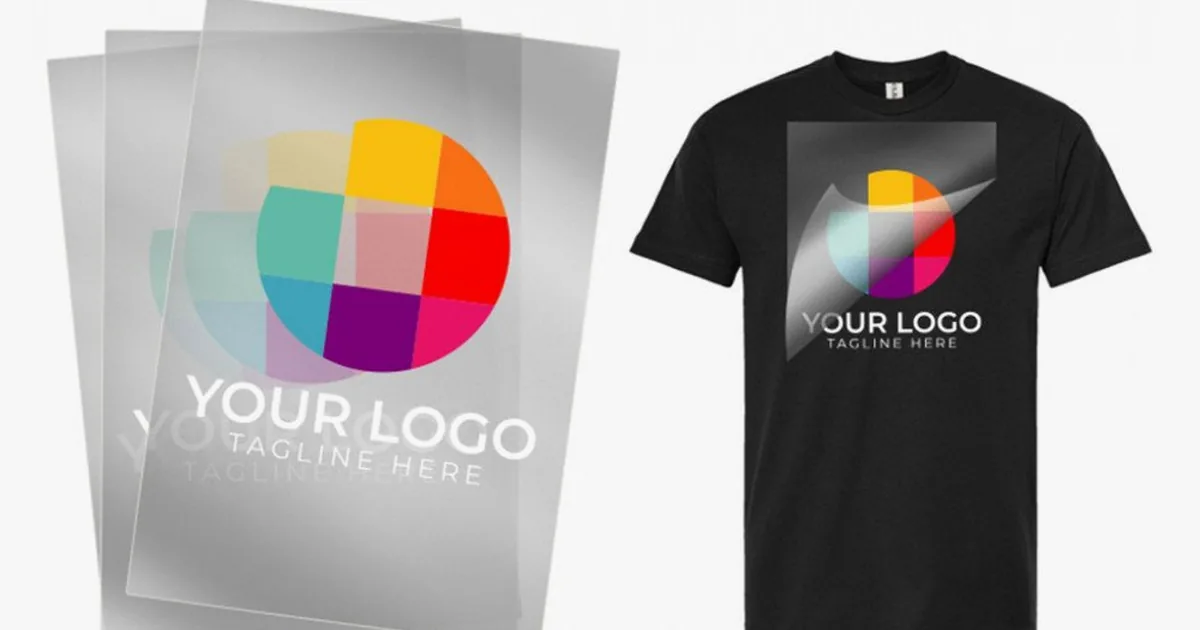
For a small custom order, DTF usually fits better. In DTF vs screen printing, the big difference is setup. Screen printing needs a separate screen for each ink color [6], while DTF prints full-color art digitally onto film, with no screen for each color [7]. Screen printing pulls ahead when you need many copies of one simple design, because its setup cost gets spread over more pieces.
One thing to know first: we sell DTF transfers, which you or a decorator press onto the garment [2]. So compare full costs, not just the transfer price against a finished shirt.
The rest of this guide walks through five checks: total cost, colors, fabric, feel and wash life, and how often the design changes.
Table of Contents
DTF vs screen printing at a glance
| DTF (direct to film) | Screen printing | |
|---|---|---|
| How it prints | Digitally, onto film, then heat-pressed onto fabric [7] | Ink pushed through a mesh stencil, one screen per ink color [6] |
| Setup per design | Low: no screens, just a digital file | Higher: a stencil is made for each color in each design [6] |
| Colors and detail | Full color, gradients and photos without extra screens | Simplest with a few solid colors; photos need halftones and more screens [6] |
| Fabric | Light and dark fabrics, cotton, polyester, blends [5][2] | Textiles, paper and many other surfaces [6] |
| Feel and wash life | Depends on coverage, fabric and how it is pressed | Depends on ink, coverage, fabric and curing |
| Good fit for | Small batches and one-offs | Bulk orders of simple designs |
How each method works
DTF stands for direct to film. Your design is printed onto a special film. Adhesive powder is added while the ink is still tacky, the film is cured, and then a heat press bonds it to the fabric [7]. Our DTF transfers are printed in CMYK color plus a layer of white ink [2]. Thanks to the white, colors stay vivid on pale and dark fabric alike [2].
Screen printing works more like a stencil. A mesh screen is coated with a light-sensitive liquid called emulsion, then exposed to light so only the design area stays open [6]. Ink is pulled across the screen with a squeegee and pushed through onto the surface below [6].
Each ink color gets its own screen [6]. On dark shirts, many printers first lay down an underbase [4]. That is a light layer of ink that blocks the shirt color, so the colors on top look bright [4]. That underbase is printed before the other colors [4], so it can add to the setup.
Check 1: What will the whole job cost?
This is the check that settles most DTF vs screen printing questions, and it is easy to get wrong. A DTF transfer price and a screen printer’s quote are not the same thing.
- A DTF transfer order covers printed transfers. You still need the blank garments, shipping, a heat press (or someone who has one) and the time to press each piece [2].
- A screen printing quote usually covers finished, printed garments. Its setup cost stays the same whether you print 10 shirts or 100.
So add up everything on the DTF side before you compare. On a short run, the fixed screen setup is shared by only a few pieces, which often tips small jobs toward DTF.
Here is a simple way to see it. A five-color design needs five screens [6], whether you print 15 shirts or 500. On 15 shirts, those screens push up the price of each shirt. Across hundreds of shirts, they matter far less.
There is no one quantity where screen printing starts to win. It depends on the shop, the colors and the labor. Let real quotes decide.
Check 2: How many colors and how much detail?
Color count is the second big factor in DTF vs screen printing. Count the colors in your design. A one-color logo is easy to screen print. A photo, a gradient (colors that fade into each other) or fine shadows takes more work.
DTF reproduces full-color art digitally, with no separate screen for each color [7]. Screen printing can print photos and fine detail too. It does it with halftones, tiny dots that blend to the eye, on a fine mesh, with a separate screen for each color layer [6]. So it is possible, but the preparation is more involved.
Got several colors and only a few dozen pieces? Then the DTF vs screen printing choice usually leans toward DTF.
Check 3: What fabric and shirt color?
DTF transfers can go on cotton, polyester and blends [5], and screen printing is widely used on textiles [6]. Our DTF transfers also work on hats, totes and more [2].
Dark shirts take more care with both. With DTF, white ink prints under the colors, so one transfer suits both pale and dark shirts [2]. With screen printing, a light underbase is often printed first so the colors stand out [4].
Polyester needs a test. Dye in some colored polyester can move into a heat-pressed print and tint it, a problem called dye migration [5]. A white print on red polyester, for example, can turn pinkish [5]. Roland DGA, a maker of DTF printers, presses polyester at a lower heat than cotton and says to test before production [5].
So press one test garment first, especially polyester, heat-sensitive fabrics or coated items. Always follow the application steps from your transfer supplier.
Need to print on mugs, tumblers or other hard surfaces instead? That is a job for UV DTF stickers. You peel them and stick them on, with no heat press at all [3]. Our product page does not say they can go in the dishwasher or be used where food or lips touch. Ask us before you use them that way.
Check 4: How should it feel, and how long should it last?
In DTF vs screen printing, neither method is automatically softer or longer lasting. Feel and wash life depend on the ink, the fabric and how much of the shirt the print covers. They also depend on how well the print was cured or pressed.
A few patterns help set expectations. DTF leaves a thin layer on top of the fabric, and large solid areas can feel stiff. In screen printing, plastisol (a common thick ink) feels heavier, while water-based ink soaks in and feels lighter.
In both, a print that was not cured or pressed properly can crack.
Care helps either way. Wash the garment inside out in cold water and skip high dryer heat.
Check 5: Will the design change from piece to piece?
Names on the back of team shirts, a different date for each event, or six small designs for six departments: all of these favor DTF. Screen printing is not digital, so a change to the artwork generally needs new or extra stencils [6].
Not every change does. A screen can be used again for the same image [1], so reprinting the same art in a different ink color may reuse it. Ask your printer.
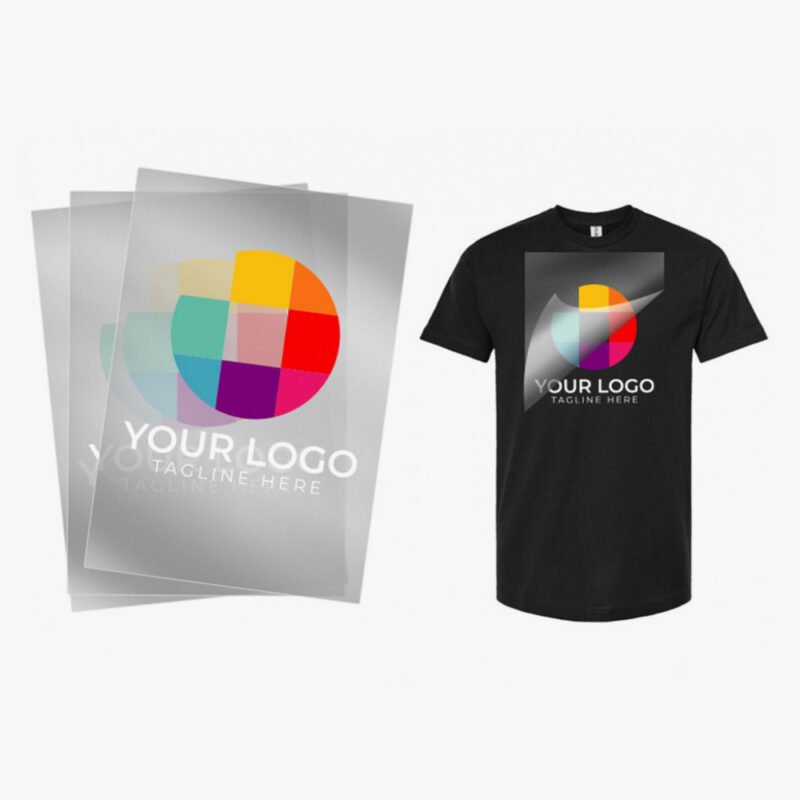
On the DTF side of DTF vs screen printing, you order by the sheet, not by the design. A gang sheet lets you fill one sheet with several logos or designs in different sizes [3]. Space the designs a little apart, so you can cut them apart later [3]. Our DTF sheets come 22 inches wide, in lengths from 3 to 120 inches [3].
Limits of each method
Neither side of DTF vs screen printing is perfect.
- DTF costs more per piece at high volume. Its per-unit cost does not drop as sharply as screen printing’s on big runs.
- DTF can feel heavier on big designs. Large solid areas can feel stiff.
- DTF uses single-use film, which adds material waste.
- DTF transfers still have to be applied. That takes a heat press, time and a test piece.
- Screen printing is slow to set up and costly for small quantities.
- Screen printing needs more preparation for photos and fine detail, using halftones and a separate screen for each color [6].
How we can help
We print DTF transfers for fabric and UV DTF stickers for hard surfaces. Both are on our DTF transfers and UV DTF page. Pick a sheet size, see the price, and upload your file.
For DTF, upload a PNG file whose background is transparent, sized to the width of your sheet. Aim for 300 dpi at print size [3].
Any white in the file prints as white ink, so make areas you want empty transparent instead [3]. No artwork yet? Our graphic design services can prepare it, with design and mockups from $75 [3]. Questions about your order? Contact our Atlanta team.
Frequently asked questions
Is DTF cheaper than screen printing for small orders?
Often, once you count everything. DTF has a low setup cost per design, while screen printing pays for screens on every job. But a transfer order does not include garments or pressing, so add those before you compare it with a finished-shirt quote.
Which lasts longer, DTF or screen printing?
It depends on the ink, the fabric, the coverage and how well the print was cured or pressed. Washing inside out in cold water helps either one.
Does DTF work on dark shirts?
Yes. With our DTF transfers, white ink prints under the colors, so they stay vivid on pale and dark fabric [2].
What about DTF vs screen printing for a design with one color?
For a simple one-color logo, screen printing gets more attractive as the quantity grows, since there is little to set up. For a handful of shirts, DTF can still be simpler, because there are no screens at all.
Sources
- Standard Operating Procedure: Screen Printing, Nebraska Innovation Studio (University of Nebraska): reusing a screen with the original image
- DTF Transfers, 15X Prints: CMYK + white, light and dark fabrics, heat press application
- DTF Transfers and UV DTF Stickers, 15X Prints: sheet sizes, gang sheets, file setup, UV DTF, design from $75
- Underbases: Why, When and How, PRINTING United Alliance journal: what an underbase does on dark shirts
- Applying DTF Transfers to Polyester Garments, Roland DGA: dye migration, lower heat for polyester, test before production
- Screenprinting: What It Is, How It Works, World of Printmaking: stencils, emulsion, squeegee, one screen per color, halftones, surfaces
- Direct-to-film printing, Wikipedia: printing on film, white backing, adhesive powder, heat press
