

Trade Show Advance Warehouse vs Direct: 6 Smart Checks Before Booking

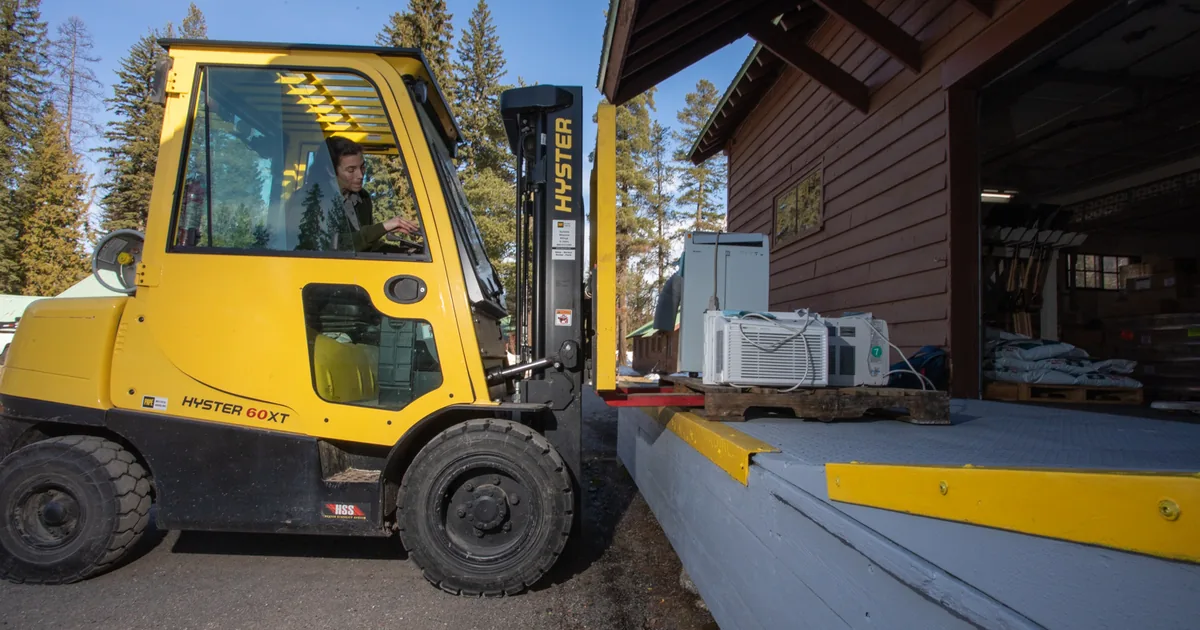
A trade show advance warehouse is a storage site run by the show’s freight contractor. You ship your booth there days or weeks early.
Freight received inside the approved window is generally scheduled for delivery to your booth before your assigned setup begins, but confirm that with the contractor. Shipping direct means your freight goes to the venue itself, on a set move-in day. Which is better depends on your show’s rules, how your booth is packed and the fees.
Below are the two options side by side, then six easy checks to pick one for your next show.
Table of Contents
What each option means
Advance warehouse. The show names an official contractor, such as Freeman or GES, to receive and move all freight, meaning everything you ship [1][2]. That contractor runs the advance warehouse. For example, Freeman took advance freight for RE+ 26 from October 13 to November 5, 2026, for a show on November 17 to 19 [2]. Your shipment then waits there and goes to your booth for move-in.
Direct to show site. Your carrier drives to the venue during your move-in window. Direct shipments to RE+ 26 could start on November 12, 2026, on each exhibitor’s assigned target move-in date [2]. A target move-in date is the day and time slot the show gives your booth to bring freight in.
Either route may come with material handling charges, also called drayage, so check your package’s inclusions, allowances and minimums. Material handling covers unloading your freight and taking it to your booth [1][3]. It also covers storing your empty boxes and loading everything back up after the show.
| Advance warehouse | Direct to show site | |
|---|---|---|
| When it arrives | Days or weeks early, inside the receiving dates [2] | On your move-in date [2] |
| Ready when you arrive? | Generally delivered before your setup time; confirm with the contractor [3] | Only once your truck is unloaded |
| What it accepts | Crated, boxed or skidded freight [5]; limits on loose items and size [3] | Set by your show’s rules [2] |
| Delivery process | Your carrier drops off inside the receiving window and hours [2] | Trucks wait their turn at a marshalling yard [2][3] |
| Main risk | A late surcharge if you miss the deadline [3][4] | Delays and waiting time at the venue [3][4] |
1. Check your show’s dates first
Every show sets its own receiving dates for the warehouse and for direct delivery. Find them in the exhibitor service manual, the show’s packet of rules and order forms [4]. Look for pages called “Quick Facts” or “Shipping Information” [4].
Some shows have no advance warehouse at all, so check that it exists before you plan [4].
Write down three dates: the first receiving day, the last day before late fees and your target move-in date. Note the receiving hours too. At RE+ 26, the warehouse took freight 7 a.m. to 2:30 p.m. on weekdays [2].
2. Check how your booth is packed
Warehouses are strict about packing. The shipping page for Shoptalk Spring would not accept uncrated freight, meaning loose or pad-wrapped items, at its trade show advance warehouse [3]. That page carries a 2027 event heading but 2026 dates, so treat it as an example of typical rules, not current terms. It also turned away any one piece over 5,000 pounds [3]. Pieces taller than 108 inches or wider than 93 inches were turned away too [3].

So pack in crates, fiber cases or on pallets (wooden shipping platforms), and shrink-wrap the load [1]. Our tension fabric and pop up displays pack into carry bags. Some, such as the Straight Tension Fabric Display, also offer a hard case that turns into a podium. If your show turns away loose items, ask your trucking company how to pack bags inside a carton or on a pallet.
3. Compare the total cost, not just handling
Whether you use a trade show advance warehouse or ship direct, add up the whole trip. Count transportation both ways, material handling, any late surcharge and possible carrier waiting charges. A cheaper handling rate does not always mean a cheaper shipment. Fees differ from show to show, so read your show’s price list.
Some contractors charge the same either way. GES has a pricing plan called Material Handling+. When it is available, freight sent to the GES advance warehouse inside the posted dates costs the same as freight sent direct [1]. Single items up to 4,400 pounds qualify [1].
Its rates depend on weight and on whether freight arrives inside the posted dates [1]. Shipments under 25 pounds are billed at one flat rate under that program [1].
Others charge more for the warehouse. One trade show freight company gives an example of $96.25 per CWT for advance warehouse handling against $78 per CWT for direct [4]. CWT means “hundredweight”, or 100 pounds.
In that example, a 300-pound shipment would cost $288.75 to handle through the warehouse [4]. Sent direct, the same 3 CWT would cost $234, a difference of $54.75 before any other charges. Treat those figures as one example, not a current rate.
Late arrivals usually cost more. At one show, freight that reached the warehouse after the deadline got a late surcharge [3], and another source calls extra charges highly likely [4].
4. Think about when you arrive
The big plus of a trade show advance warehouse is time. One show’s contractor recommends it if you want to start setting up the moment you arrive [3]. Freight that arrives on time is generally scheduled for your booth before setup, but confirm the timing with the contractor.
There is a trade-off. Once your freight goes to the warehouse, you cannot get at it outside move-in hours [3]. So if you need something from those boxes before the show, keep it out of the shipment.
5. Weigh the risk of delays
Direct shipping depends on a tight window. Trucks check in at a marshalling yard, a holding area where they wait their turn to unload [2][3]. One show warns that direct shipments “may be significantly delayed”, which can raise your handling and labor costs [3].
Waiting costs money too. Carriers often charge waiting time while they sit at the marshalling yard [4]. And deliveries that arrive outside the venue’s window may be refused [3][5].
The warehouse has its own deadline risk. Ship well before the cutoff, but schedule the arrival inside the approved receiving window and hours. One freight company suggests shipping “at least a week and a half before the closure of the warehouse” [4]. It gets busier near the end.
6. Size up your shipment
A full booth kit, a counter and a few boxes of brochures suit the trade show advance warehouse.
Some shows let exhibitors hand-carry small items straight to their booth, under their own rules [5]. If your whole display fits in a carry bag or two, read the hand-carry rules in your exhibitor manual before you book a carrier.
How to label a warehouse shipment
A trade show advance warehouse takes in freight for many booths, so clear labels matter. Use the show’s own label if it has one [3]. RE+ 26, for example, asks you to include the event name, “RE+26”, and your booth number [2]. Otherwise include [4]:

- The advance warehouse receiving dates
- The warehouse address, “care of” the contractor’s name
- The event name
- Your company name as it appears in the show directory
- Your booth number
- The piece count, such as “1 of 3”
Some shows also want a certified weight ticket with each shipment [3]. That is a slip from a certified scale showing what the load weighs. GES may weigh freight itself to check the paperwork [1].
Don’t forget the return trip
After the show, the contractor brings back your empty crates and boxes, then loads your freight onto your carrier [1][2]. Freeman began returning empty containers at the close of RE+ 26 and warned that it would take several hours [2].
Label every empty container so it comes back to you [3]. Then complete the contractor’s outbound material handling paperwork, such as the outbound form one show posts [3]. Confirm your carrier’s check-in deadline on the last day too. Booking a carrier alone is not enough.
Limits of this guide
Rules, dates and fees change by show, city and contractor, and every example here comes from one show or one company. Your exhibitor service manual is the only source that counts for your show. When it and this guide differ, follow the manual.
How we can help
The lighter your display, the easier both routes get. Our trade show displays use aluminum frames that come apart for travel, and many come with a carry bag. Hard cases and replacement parts are in our display accessories.
Have a show date? Mention it on your order. Our shipping policy asks for it, so we can check the timing with you. Questions about delivery dates for your order? Contact us.
Frequently asked questions
Is the trade show advance warehouse more expensive?
Sometimes. It depends on who runs the show’s freight and which plan applies [1][4]. The only reliable answer is your show’s own price list.
How early can I ship to the advance warehouse?
Only inside the receiving window in your exhibitor manual. For RE+ 26, that window opened about five weeks before the show [2]. Late freight can cost more [3], and direct deliveries that come too early may be refused [3].
Can I send a display in a soft carry bag?
It depends on the show. Some warehouses refuse loose items [3]. Packing bags inside a carton or on a pallet helps you meet those rules.
Who do I ask about my show’s shipping rules?
The show’s official contractor, such as Freeman or GES. Its name is in the exhibitor service manual, along with the trade show advance warehouse address and receiving dates [4].
Sources
- Material Handling Made Easy, GES: what material handling covers, Material Handling+ same rate for advance and direct within dates, 4,400 lb items, flat rate under 25 lb, packing, weighing
- Exhibitor Information, RE+ 26 (Freeman): 2026 advance and direct dates, target move-in, receiving hours, marshalling yard, empty container return
- Shipping, Shoptalk Spring (T3 / FreemanOnline), page as posted October 2026 with a 2027 heading and 2026 dates: what the warehouse refuses, size and weight limits, late surcharge, delays direct, marshalling yard, access limits, weight tickets, empty labels
- A Complete Guide to the Trade Show Advance Warehouse, DTS: exhibitor manual pages, example CWT rates, waiting fees, ship 1.5 weeks early, label contents
- Shipping Information sheet, GES (2019 show): crated, boxed or skidded freight, hand-carry option, refused deliveries
